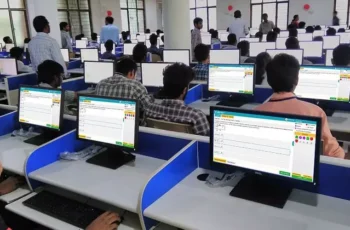

NEET 2027 is expected to be held on 2 May 2027, and this is the biggest news for aspirants — NEET 2027 will be conducted in Computer-Based Test (CBT) mode, as confirmed by the Ministry of Education. The exam will have 180 questions for 720 marks from Physics, Chemistry, and Biology. If you start in October 2026, you get exactly 7 months to prepare. This blog gives you a complete 7-month NEET 2027 preparation roadmap with a month-wise study plan, subject-wise strategy, best books, mock test schedule, and tips to handle the new CBT format. Read till the end for a ready-to-follow weekly timetable and revision plan.
Index
- NEET 2027: Latest Updates You Must Know
- NEET 2027 Exam Pattern and Marking Scheme
- NEET 2027 Important Dates (Tentative)
- Eligibility Criteria and Qualifying Cutoff
- Your 7-Month Preparation Roadmap (October to April)
- Subject-wise Preparation Strategy
- Ideal Weekly Timetable for NEET 2027
- Best Books for NEET 2027
- Mock Tests and CBT Practice
- Last 30 Days: The Final Revision Plan
- Common Mistakes to Avoid
- How Expert Guidance Helps After NEET
- Frequently Asked Questions
- Conclusion
NEET 2027: Latest Updates You Must Know
Before you open your books, understand what has changed. NEET 2027 is not going to be the same exam your seniors gave. Here are the key updates every aspirant should know:
- CBT mode confirmed: NEET-UG 2027 will be conducted online in Computer-Based Test (CBT) mode. The Ministry of Education confirmed this after the 2026 paper leak case. Pen-and-paper OMR sheets are gone.
- Expected exam date: NEET is usually held on the first Sunday of May. So NEET 2027 is expected on 2 May 2027. The official date will be announced in the information bulletin.
- Multiple shifts possible: Since more than 22 lakh students register, the exam may be held in multiple shifts, with percentile-based normalisation of scores, similar to JEE Main and CUET.
- Duration: The exam is expected to run for 3 hours to 3 hours 15 minutes. The final duration will be mentioned in the bulletin.
- Syllabus: The syllabus follows the revised NMC-prescribed syllabus with 79 chapters across Physics, Chemistry, and Biology, aligned with the rationalised NCERT books. Always prepare from the latest NCERT editions.
- Age limit and attempts: Currently there is no upper age limit. A cap on age and number of attempts is under government consideration, but nothing is confirmed yet.
The biggest takeaway is simple: your preparation strategy stays the same, but your exam-day practice must now include computer-based mock tests. A student who is comfortable reading questions on a screen will have a real advantage in 2027.
NEET 2027 Exam Pattern and Marking Scheme
| Particulars | Details |
|---|---|
| Exam Mode | Computer-Based Test (CBT) |
| Total Questions | 180 (all compulsory) |
| Total Marks | 720 |
| Physics | 45 questions, 180 marks |
| Chemistry | 45 questions, 180 marks |
| Biology (Botany + Zoology) | 90 questions, 360 marks |
| Marking Scheme | +4 for correct answer, -1 for wrong answer, 0 for unattempted |
| Duration | 3 hours to 3 hours 15 minutes (expected) |
| Languages | 13 languages including English and Hindi |
Remember, Biology alone carries 50% of the total marks. This is why toppers always say: NCERT Biology can make or break your rank.
NEET 2027 Important Dates (Tentative)
The National Testing Agency (NTA) will release the official schedule in the information bulletin. Based on previous years, here is the expected timeline:
| Event | Expected Date |
|---|---|
| Information Bulletin Release | February 2027 |
| Online Registration Starts | February 2027 |
| Last Date to Apply and Pay Fee | March 2027 |
| Application Correction Window | March 2027 |
| Exam City Intimation Slip | April 2027 |
| Admit Card Release | April 2027 |
| NEET 2027 Exam Date | 2 May 2027 (expected) |
| Answer Key and Result | May to June 2027 |
| Counselling Process | July 2027 onwards |
Eligibility Criteria and Qualifying Cutoff
To appear in NEET 2027, you must have passed Class 12 with Physics, Chemistry, and Biology. You should be at least 17 years old. There is currently no upper age limit.
To qualify the exam, you need to score above the minimum percentile:
| Category | Minimum Qualifying Percentile |
|---|---|
| UR / EWS | 50th percentile |
| OBC / SC / ST | 40th percentile |
| UR / EWS – PwD | 45th percentile |
| OBC / SC / ST – PwD | 40th percentile |
Your 7-Month Preparation Roadmap (October to April)
Seven months is enough time to complete the full NEET syllabus, revise it twice, and attempt 30+ full-length mock tests — if you follow a structured plan. Here is your month-by-month roadmap:
Month 1 – October 2026: Diagnose and Build Basics
- Take one full syllabus test on day one to know your real level. Do not skip this.
- Start NCERT Biology from Class 11. Read one chapter daily and make short notes.
- Finish high-weightage Physics chapters: Units and Measurement, Kinematics, and Laws of Motion.
- Complete Chemistry fundamentals: Mole Concept, Atomic Structure, and Chemical Bonding.
- Fix your daily routine now. Consistency in October is more important than long study hours.
Month 2 – November 2026: Complete Class 11 Core Chapters
- Biology: Finish Cell, Plant Kingdom, Animal Kingdom, and Body Fluids and Circulation.
- Physics: Work, Energy, Power, Rotational Motion, and Gravitation.
- Chemistry: Thermodynamics, Equilibrium, and GOC (General Organic Chemistry).
- Solve 50–70 MCQs per chapter from a standard question bank.
- Revise October chapters on Sundays. Revision from month two is a topper habit.
Month 3 – December 2026: Finish Class 11 Syllabus
- Complete the remaining Class 11 chapters in all three subjects.
- Start Class 12 chapters alongside — Biology Genetics and Human Physiology, Physics Current Electricity, Chemistry Solutions and Electrochemistry.
- Attempt your first full syllabus mock test at the end of December.
- Maintain an error log. Write down every silly mistake and every concept you forgot.
Month 4 – January 2027: Push Through Class 12 Syllabus
- Biology: Biotechnology, Human Reproduction, Reproductive Health, and Human Health and Disease.
- Physics: Ray Optics, Wave Optics, and Modern Physics — these are scoring, formula-based chapters.
- Chemistry: Complete Organic Chemistry (Aldehydes, Ketones, Amines, Biomolecules) and Inorganic blocks.
- Increase daily MCQ practice to 120–150 questions.
- Register-related alert: keep your documents ready (Aadhaar, category certificate, photo) for the February application window.
Month 5 – February 2027: Syllabus Completion + First Full Revision
- Finish any leftover chapters by the second week of February.
- Fill the NEET 2027 application form carefully. Double-check your photo, signature, and category details.
- Begin the first full revision using short notes and NCERT.
- Give two full-length mock tests every week — and take them on a computer or laptop to build CBT comfort.
- Target: 90% syllabus covered, with revision of high-weightage chapters done once.
Month 6 – March 2027: Mock Test Season
- Attempt three full syllabus mock tests per week.
- Spend equal time analysing each test. Analysis teaches more than attempting.
- Revise NCERT Biology line by line — diagrams, tables, examples, and scientific names.
- Memorise all Physics formulas and Chemistry reactions in a single formula notebook.
- Work only on weak areas identified in your error log. Stop learning new material.
Month 7 – April 2027: Final Revision and Peak Performance
- One full mock test daily or on alternate days in exact exam timing (2 PM to 5 PM slot practice).
- Revise only NCERT, your short notes, and previous year questions. No new books.
- Download the admit card early and check your exam centre details.
- Practise rough work on paper quickly — in CBT mode you get a physical scratch pad, so train yourself to do calculations fast on paper.
- Sleep 7–8 hours, eat well, and keep the last two days light. Confidence is your final subject.
Here is the roadmap at a glance:
| Month | Main Focus | Key Target |
|---|---|---|
| October 2026 | Basics and diagnosis | One self-test, start NCERT Biology and fundamental chapters |
| November 2026 | Class 11 core chapters | 50–70 MCQs per chapter, weekly revision |
| December 2026 | Finish Class 11 | First full mock test, error log started |
| January 2027 | Class 12 syllabus push | 120–150 MCQs daily, documents ready |
| February 2027 | Syllabus completion + revision | Application form, two mocks per week |
| March 2027 | Mock test season | Three mocks per week, NCERT line-by-line revision |
| April 2027 | Final revision | Daily mocks in exam slot, light and confident routine |

Subject-wise Preparation Strategy
Biology (360 marks – Your Rank Decider)
- NCERT is the Bible. Read every line, including diagrams, tables, and examples.
- High-weightage chapters: Genetics, Human Physiology, Plant Physiology, Ecology, and Biotechnology.
- Solve assertion-reason and statement-based questions — these are common in Biology.
- Revise each chapter at least 4–5 times before the exam.
Chemistry (180 marks – The Scoring Subject)
- Physical Chemistry: Focus on numerical practice. Mole Concept, Electrochemistry, and Thermodynamics repeat every year.
- Organic Chemistry: Master GOC first. Learn named reactions, mechanisms, and conversions. Most organic questions are NCERT-based.
- Inorganic Chemistry: Purely memory-based. Read NCERT daily like a newspaper — p-block, d-block, and Coordination Compounds are must-do chapters.
Physics (180 marks – The Differentiator)
- Concept clarity first, formula memorisation second, practice third.
- High-weightage chapters: Current Electricity, Moving Charges and Magnetism, Ray Optics, Thermodynamics, and Modern Physics.
- Solve 40–50 questions daily. Physics improves only with daily practice.
- Modern Physics is short, easy, and fetches quick marks — never skip it.
Ideal Weekly Timetable for NEET 2027
This is a practical timetable for a student studying 8–9 hours daily. Adjust it to your own school or coaching schedule:
| Time Slot | Activity |
|---|---|
| 6:00 AM – 8:00 AM | Biology – NCERT reading and notes |
| 9:00 AM – 11:00 AM | Chemistry – new chapter and theory |
| 11:30 AM – 1:30 PM | Physics – concept study and solved examples |
| 3:00 PM – 5:00 PM | MCQ practice of the day’s chapters (100+ questions) |
| 6:00 PM – 7:30 PM | Inorganic Chemistry / formula revision |
| 8:00 PM – 9:00 PM | Error log update and quick revision of the day |
| Sunday | Weekly revision + one test (from February onwards) |
Best Books for NEET 2027
You do not need ten books per subject. You need NCERT plus one reliable practice book:
| Subject | Must-Have Book | Practice Book |
|---|---|---|
| Biology | NCERT Class 11 and 12 (latest edition) | Objective Biology (Trueman) or MTG NCERT at Your Fingertips |
| Chemistry | NCERT Class 11 and 12 | MS Chauhan (Organic), N Awasthi (Physical), VK Jaiswal (Inorganic) |
| Physics | NCERT + coaching study material | DC Pandey or HC Verma for concept building |
| All Subjects | NEET Previous Year Question Papers (last 10–15 years) | Full-length mock test series in CBT mode |

Mock Tests and CBT Practice
Since NEET 2027 will be computer-based, your mock test strategy must change. Here is what to do:
- Take mocks on a computer or laptop, not on paper. Get used to reading questions on a screen.
- Learn on-screen rough work: You will get a physical scratch pad. Practise solving numericals while looking at the screen and writing on paper at speed.
- Use the flag-and-review feature: In CBT, you can mark questions and return later. Practise this in every mock.
- Analyse every mock: Divide mistakes into three types — silly mistakes, concept gaps, and time pressure. Fix each type differently.
- Test frequency: One mock every two weeks till January, two per week in February, three per week in March, and daily or alternate days in April.
Last 30 Days: The Final Revision Plan
- Revise NCERT Biology one final time — it should take 10–12 days at 3–4 chapters per day.
- Read only your short notes and formula sheets for Physics and Chemistry.
- Solve previous year questions from 2015 onwards one more time.
- Take mocks in the 2 PM – 5 PM slot so your brain is sharp at exam time.
- Avoid new books, new coaching material, and negative conversations with worried friends.
- Visit your exam centre once before the exam day if possible.
Common Mistakes to Avoid
- Ignoring NCERT: More than 85–90% of Biology questions come directly from NCERT.
- Too many books: One theory book plus one question bank per subject is enough.
- No revision: Studying new chapters without revision is like filling a bucket with a hole.
- Skipping mock analysis: Attempting 50 mocks without analysis is less useful than 20 mocks with deep analysis.
- Negative marking panic: Do not guess randomly. Attempt questions you can eliminate down to two options.
- Neglecting health: Sleepless nights destroy memory. Your brain stores what you revise while well-rested.
How Expert Guidance Helps After NEET
Cracking NEET is only half the journey. Converting your score into a government medical college seat needs smart counselling. After the result, you must handle choice filling, category certificates, state quota rules, round-wise cutoffs, and mop-up rounds — one small mistake can cost you a seat.
This is where professional admission guidance makes a difference. Experienced counsellors help you with college prediction based on your rank, state-wise quota strategy, documentation, and timely choice filling so you never miss a good opportunity. A 7-month preparation plan followed by expert counselling support gives you the complete path — from first mock test to first day of MBBS.
Frequently Asked Questions
When will NEET 2027 be conducted?
NEET 2027 is expected on 2 May 2027, based on the pattern of previous years. The official date will be announced by NTA in the information bulletin around February 2027.
Will NEET 2027 be online?
Yes. NEET-UG 2027 will be conducted in Computer-Based Test (CBT) mode. The Ministry of Education has confirmed the shift from pen-and-paper to online format starting from the 2027 cycle.
Is 7 months enough to prepare for NEET 2027?
Yes. Seven months is enough if you study 8–9 hours daily, follow NCERT sincerely, solve questions daily, and give regular mock tests. Many toppers have prepared seriously within this time frame.
How many questions are there in NEET 2027?
There will be 180 compulsory questions — 45 from Physics, 45 from Chemistry, and 90 from Biology — for a total of 720 marks, with +4 for every correct answer and -1 for every wrong answer.
Has the NEET 2027 syllabus changed?
NEET 2027 follows the revised NMC-prescribed syllabus with 79 chapters from Class 11 and 12, aligned with the rationalised NCERT books. Always study from the latest NCERT editions and check the official syllabus PDF once it is released.
Will NEET 2027 have negative marking?
Yes. One mark is deducted for every incorrect answer, while unattempted questions carry no penalty.
Conclusion
NEET 2027 brings a new challenge and a new opportunity. The exam is going online, but the formula for success remains the same — NCERT mastery, daily practice, honest revision, and calm mock test analysis. Starting in October gives you seven solid months. Follow this roadmap month by month, track your progress weekly, and do not compare your journey with others. Stay consistent, trust the process, and walk into the exam hall on 2 May 2027 knowing you have done everything right. Your white coat is waiting — now go and earn it.